Elucidating The Causal Basis Of Human Metabolic Diseases Through Genetics Led Systematic Studies In Mouse Models – Ayo A. Toye (PhD.)

Elucidating The Causal Basis Of Human Metabolic Diseases Through Genetics Led Systematic Studies In Mouse Models – Ayo A. Toye (PhD)
Principal Fellow of The Causal Genetics Institute (CGenI), UK
CEO of Causal Genetics Limited, UK

Dr. TOYE_IGCLM_Presentation_FINAL

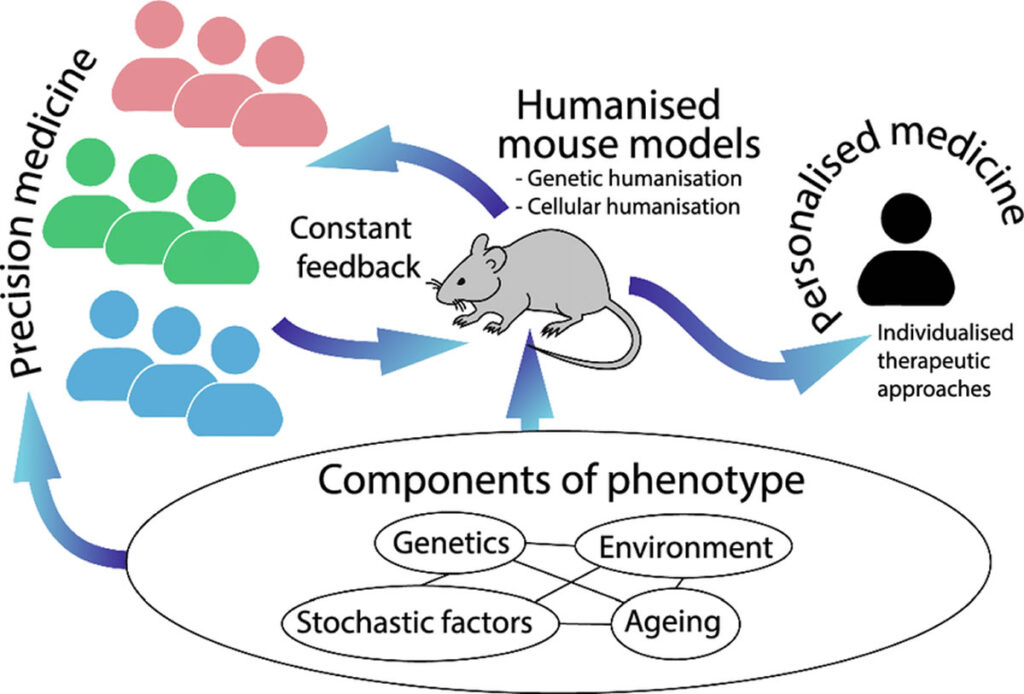
Elucidating the causal basis of human metabolic diseases through genetics and systematic studies in mouse models—as pioneered by researchers like Dr Ayo A. Toye—focuses on deciphering the complex, polygenic roots of conditions such as type 2 diabetes, obesity, and non-alcoholic fatty liver disease (NAFLD). By utilising controlled genetic models, such as the 129S6 inbred mouse strain, or using N-ethyl-N-nitrosourea (ENU) mutagenesis to introduce specific missense mutations (e.g., in the glucokinase gene), scientists can bypass the environmental noise that complicates human clinical studies. These engineered murine models are subjected to specific dietary and metabolic challenges, such as high-fat diets (HFDs). By applying molecular phenotyping techniques, including $^1$H NMR spectroscopy-based metabonomics, researchers can observe exactly how specific genetic polymorphisms lead to systemic metabolic dysfunctions, such as insulin resistance and hepatic steatosis. [1, 2, 3, 4, 5, 6]
The systematic approach to decoding these diseases typically integrates several core scientific pillars:

1. High-Throughput Phenotyping & Metabonomics

Rather than evaluating metabolic diseases as a single entity, systematic mouse models allow researchers to tease apart distinct “intermediate phenotypes” (e.g., hyperinsulinemia vs glucose intolerance). [7]
  • Metabolomics: By analysing plasma and urine, researchers can track how genetic predispositions disrupt specific pathways, such as choline metabolism. [3]
  • Nutrigenomic Responses: Inbred strains vary wildly in their adaptability to nutritional stress. For instance, certain strains (like $129S6$ and $C57BL/6$) have a much higher nutrigenomic susceptibility to diet-induced obesity and metabolic syndrome compared to others. [1, 5, 6]

2. The Role of the Gut Microbiome

Research stemming from these models highlights the significant crosstalk between host genetics, diet, and the gut microbiome. [3, 8]
  • Studies on insulin-resistant mice with fatty liver phenotypes have linked genetic predispositions to an altered gut microbiota profile, evidenced by high urinary excretion of microbial-derived metabolites (e.g., methylamines) and lowered circulating levels of phosphatidylcholine. [3]

3. Monogenic vs. Polygenic Dissection

  • Monogenic insights: ENU mutagenesis screens have successfully led to the discovery of novel pathogenic mutations (like missense mutations in the glucokinase gene), creating murine equivalents of human monogenic diabetes (MODY) to study direct gene-to-disease pathways. [4, 9]
  • Polygenic complexity: Because most human metabolic diseases are polygenic, the systematic study of quantitative trait loci (QTLs) in multi-strain mouse crosses allows scientists to map the precise chromosomal regions responsible for specific metabolic traits. [10, 11]

4. Relevance to Human Therapeutics

Ultimately, the goal of these studies is translation to human medicine. The metabolic biomarkers mapped in mice represent highly actionable molecular targets. Identifying the exact genetic and metabolic signatures of insulin resistance allows researchers to pinpoint points of intervention, potentially opening the door for new pharmacological treatments or personalised, genotype-guided nutritional interventions. [7, 8]

 New Year 2026: Lead City University Chancellor Prof. Ogunmola Felicitates Nigerian, Global Academic Community.

Prof Ogunmola

Ibadan, Nigeria — The Chancellor and Chairman of the Board of Trustees of Lead City University, Ibadan, Prof. Gabriel Babatunde Ogunmola, has extended warm New Year greetings to scholars, scientists, educators, and research institutions across Nigeria and the global academic community.

In his New Year message, Prof. Ogunmola described the season as a time for reflection, renewal, and renewed commitment to scholarship, ethical leadership, and service to humanity, noting that education and research remain central to national and global development.

He paid special tribute to the Nigerian Academy of Science (NAS), where he once served as President, commending the Academy’s enduring role in promoting scientific excellence and evidence-based policymaking in Nigeria.

He also acknowledged members of the Institute of Genetic Chemistry and Laboratory Medicine, where he currently serves as Chairman, for their contributions to medical research and innovation.

Reflecting on his academic career, Prof. Ogunmola highlighted the University of Ibadan, his alma mater, where he rose to become Dean of the Faculty of Science, describing the institution as a pillar of scholarship and leadership in Africa.

He also recalled his role in the development of higher education in Nigeria, having served on the Curriculum Development Committee for the establishment of Ogun State University, now known as Olabisi Onabanjo University (OOU), Ago-Iwoye, and later becoming the Foundation Dean in 1983, helping to lay the academic foundations of the institution.

“As the world confronts rapid scientific change and complex global challenges, universities and research institutions must continue to collaborate, innovate, and mentor future leaders with competence and character,” Prof. Ogunmola said.

He reaffirmed his commitment, as Chancellor of Lead City University, to advancing quality education, research excellence, and institutional integrity, and concluded by wishing the academic community a New Year filled with good health, peace, productive scholarship, and meaningful impact.

About Prof. Gabriel Babatunde Ogunmola
Prof. Gabriel Babatunde Ogunmola, FAS, is the Chancellor and Chairman of the Board of Trustees of Lead City University, Ibadan.

He is a former President of the Nigerian Academy of Science, former Dean of the Faculty of Science, University of Ibadan, a member of the Curriculum Development Committee that established Ogun State University (now Olabisi Onabanjo University), and the University’s Foundation Dean in 1983. He currently chairs the Institute of Genetic Chemistry and Laboratory Medicine.

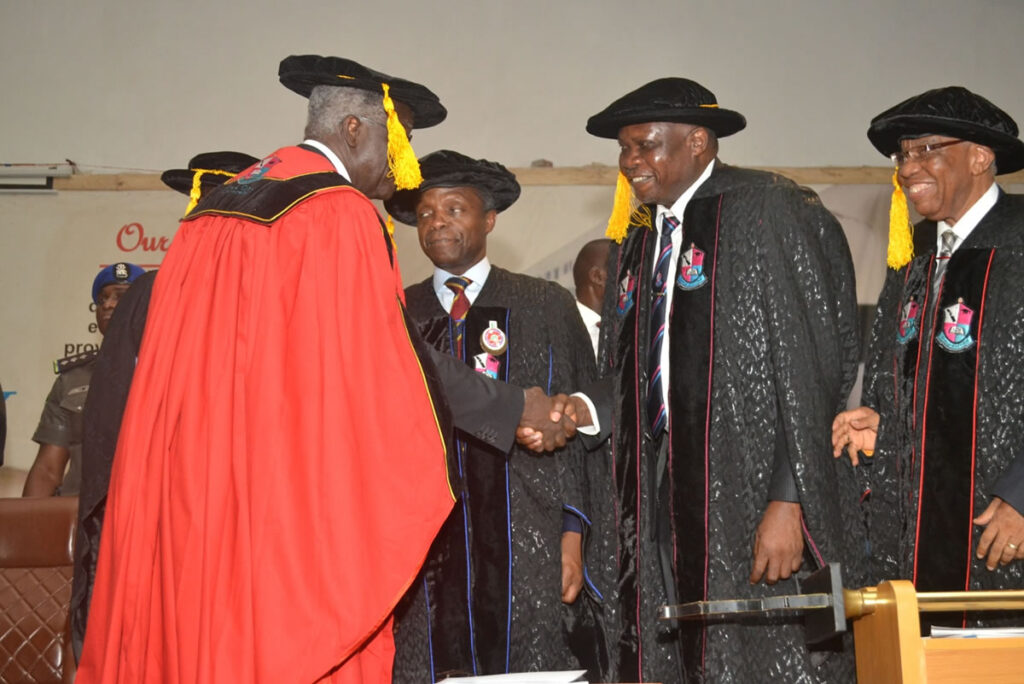
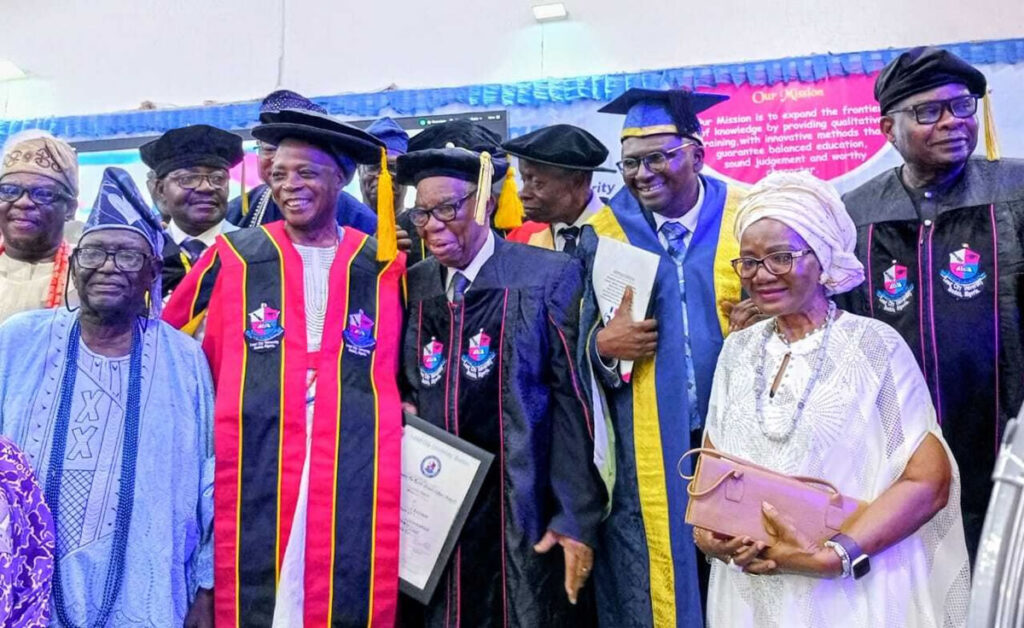
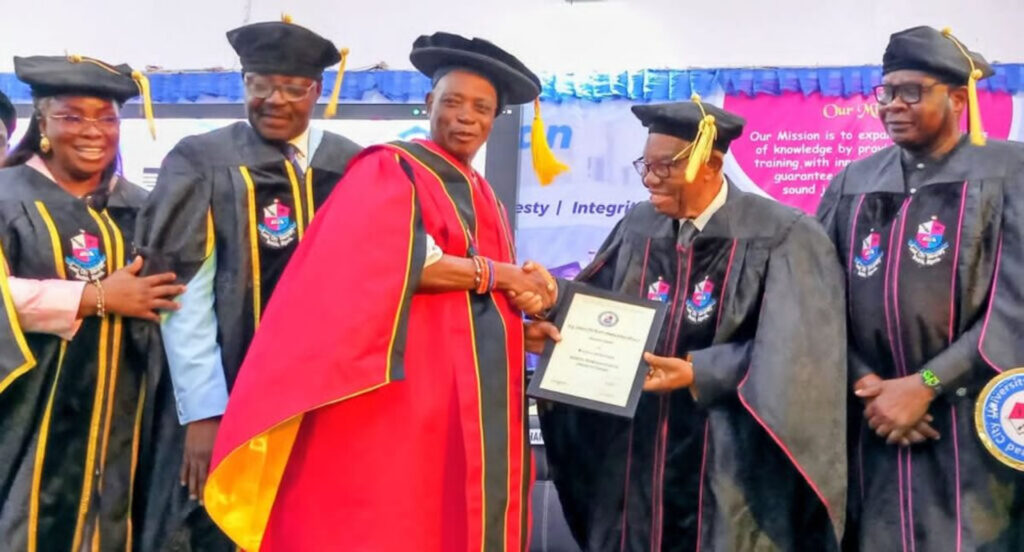
Oba Ladoja, Sunmonu, others receive honorary doctorates as Lead City graduates 3,379

Oba Ladoja, Sunmonu, others receive honorary doctorates as Lead City graduates 3,379

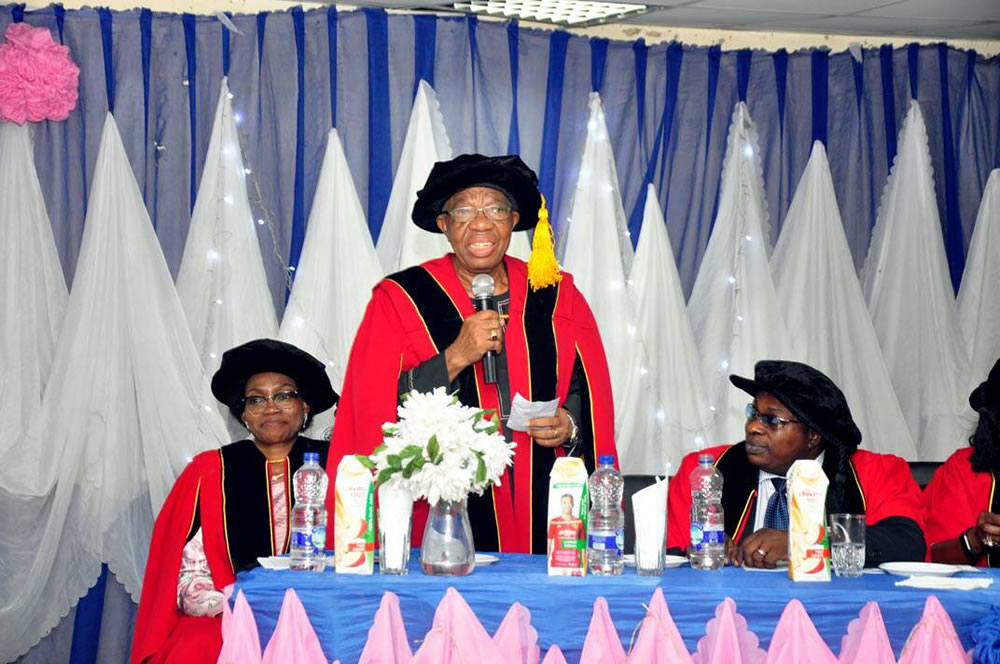
The Vice Chancellor of Lead City University, Prof. Kabiru Aderemi Adeyemo, and the institution’s Chancellor, Prof. Gabriel Ogunmola, have charged the 2025 graduating students to embrace innovation, excellence, ethical leadership and nation-building.

They made the call during the grand finale of the university’s 18th Convocation Ceremonies held at Adeline Hall, Lead City University, Ibadan.

Adeyemo disclosed that a total of 3,379 students graduated in 2025, comprising 2,162 undergraduates and 1,219 postgraduate students.

He added that 290 students earned First Class honours across various faculties, a feat he said reaffirms the university’s reputation for academic excellence. The event also marked the institution’s 20th anniversary.

The convocation, themed “The Launch of Enterprise Graduates,” brought together traditional rulers, policymakers, academics, industry leaders and other stakeholders.

It also featured the conferment of honorary doctorate degrees on distinguished Nigerians, including the Olubadan of Ibadanland, Oba Senator Rashidi Ladoja, and the pioneer President of the Nigeria Labour Congress (NLC), Comrade Hassan Adebayo Sunmonu.

In his address, Adeyemo described the ceremony as the culmination of years of dedication and intellectual growth. He noted that the 2025 convocation also reflects the university’s two-decade journey of shaping leaders who impact Nigeria and the global community.

“Dear graduates, the world you are stepping into is dynamic, technologically driven, and globally competitive, but it is full of boundless opportunities for those who are prepared,” he said.

He stressed that Lead City University had equipped its graduates with critical thinking skills, ethical leadership values, entrepreneurial orientation, practical and digital skills, and a commitment to lifelong learning. He urged them to uphold excellence, integrity, discipline and moral courage.

“You have a responsibility to create solutions, not just identify problems; to build institutions of integrity; to use technology to transform communities; to become employers rather than job seekers; and to contribute meaningfully to global development,” he said.

Adeyemo also announced that the university had submitted new academic programmes to the National Universities Commission (NUC) for approval as part of its expansion plans. He revealed that the institution invested over ₦200 million in staff training and capacity building in the last academic year. A total of 120 academic staff and 23 administrative staff attended national and international conferences, while 300 benefited from in-house training.

“These capacity-building initiatives have empowered staff with modern skills, strengthened professional competence, and ensured that Lead City University maintains the standards of a world-class academic environment,” he said.

He added that the university’s 82 academic programmes currently enjoy full accreditation, alongside strengthened digital infrastructure, improved campus security and an expanding student population.

In his remarks, the Chancellor, Prof. Ogunmola, congratulated the graduating students and urged them to uphold values that will distinguish them globally.

At the ceremony, honorary doctorate degrees were conferred upon notable Nigerians for their significant contributions to national development. Oba Ladoja received a Doctor of Science (Public Administration), while Comrade Sunmonu also received a Doctor of Science (Public Administration). Others honoured were Olalekan Bello, Chairman of FCSL Asset Management Company, and Olakunle Williams, CEO of Tetracore Energy Group.

Speaking after receiving his award, Oba Ladoja commended the university’s growth and applauded the management for “placing the institution at the forefront of excellence.”

Bello, who spoke on behalf of the awardees, praised LCU as a citadel of learning committed to shaping character and preparing graduates for global relevance. He urged the graduands to remain principled and resilient in a rapidly evolving, innovation-driven world.

Among the graduating students was Mrs Ajibola Lawal, wife of the Deputy Governor of Oyo State, who earned a Master of Philosophy in Business Administration.

Lead City varsity graduates 290 first class students at 18th convocation

Lead City varsity graduates 290 first class students at 18th convocation

Lead City University, Ibadan, on Wednesday graduated a total of 2,162 students across various faculties as it marked the grand finale of its 18th convocation ceremony, with 290 of the graduands earning first class honours.

The vice chancellor, Professor Kabiru Adeyemo, disclosed this during the event held at the university’s multipurpose hall. He said the ceremony reflected years of “dedication, perseverance, and intellectual growth” by the students.

“A total of 2,162 graduands were conferred with first degrees, while 1,219 graduands were conferred with higher degree awards, making a total of 3,379.

“The 2025 convocation marks the culmination of years of dedication, perseverance, and intellectual growth by our students, supported by their families, mentors, and the entire university community,” he said.

Adeyemo noted that the convocation spanned several days of academic celebration.

“We celebrate excellence across different faculties and reflect on the legacy of a university that continues to impact lives, inspire leadership, and contribute meaningfully to society,” he said.

The vice chancellor also announced the institution’s move to secure approval from the National Universities Commission (NUC) to introduce new programmes across multiple faculties.

On staff development, Adeyemo said: “The university has been able to sponsor both teaching and non-teaching staff for both international and local conferences. The university sponsored 120 academic staff and 23 administrative staff to attend national and international conferences, workshops, and training programmes.

“Furthermore, in-house training programmes were organised for 300 staff members in collaboration with Fortune Royal Multiconcepts, reinforcing skills in administration, teaching, and research.”

He emphasised the impact of the training initiatives, noting: “The continuous training and retraining of our teaching and non-teaching staff have yielded remarkable improvements in performance, efficiency, and overall service delivery. These capacity-building initiatives have empowered staff with modern skills, enhanced professional competence, and strengthened their ability to meet the dynamic demands of a world-class university environment.”

Adeyemo disclosed that the university had invested over N200 million in staff development.

“This substantial investment has not only elevated the quality of teaching and administrative operations but has also positioned our staff to compete favourably with their counterparts globally.

“This deliberate commitment to staff development underscores our belief that a well-trained workforce is essential to sustaining academic excellence, institutional growth, and the global reputation of Lead City University,” the VC added.

At the ceremony, the university conferred honorary doctorate degrees on the Olubadan of Ibadanland, Oba Rashidi Ladoja; the pioneer president of the Nigeria Labour Congress (NLC), Comrade Hassan Adebayo Sunmonu; Chairman of FCSL Asset Management Company, Olalekan Bello; and Chief Executive Officer of Tetracore Energy Group, and an alumnus, Olakunle Williams.

Speaking, Oba Ladoja expressed admiration for the institution’s growth, adding that he was impressed by “the level of development in the school.”

Olubadan also commended the management for “its outstanding efforts in putting the institution at the front burner.”

In his remarks, Bello praised Lead City University as “a citadel of learning whose vision and excellence have continued to illuminate the educational landscape of Nigeria.”

He added: “Today, we, the honourees, remain grateful for the timeless opportunities and life journey which, to a large extent, are unpredictable. But with the grace of God, discipline, and unwavering commitment to service, great things are possible.

“Lead City University has not only committed itself to academic excellence but has also taken the responsibility of reshaping character, instilling values, and preparing men and women for meaningful global impact.”

Bello urged the graduands to remain focused and principled as they begin new chapters.

“Anchor your lives with integrity, diligence, and moral courage. Be exceptional. The world you are entering is dynamic, innovation is reshaping industries, redefining work and transforming societies,” he said.

What we expect from the next Akarigbo of Remo

ogunmola pixAremo (Professor) Gabriel Babatunde Ogunmola is retired professor of Chemistry and Chancellor of Lead City University, a former president of the Nigerian Academy of Science. He was Dean of the Faculty of Science of the University of Ibadan and today remains a celebrated scientist globally. He is equally from the Torungbuwa Akarigbo Ruling House of Sagamu, Remo land in Ogun State. In this interview by KEHINDE OYETIMI, he speaks, inter alia, about the development of Remo land, the expectations of the people from the next Akarigbo to be installed.

What would you tie to Remo’s historical development?

Remo is a community that is primordial. When you talk of the Yoruba race, history will tell you that the origin of the Yoruba people is Ife. When you talk to the Ooni of Ife, he will tell you that the origin of the world is Ife. We all believe that Ife is our ancestral root. The Remo people came from the Iremo quarters of Ife. Different groups migrated from Ife to different parts of the Yoruba country. They walked through the virgin land to build new communities; there was no railway and they were moving until we eventually got to where we are located now as Remo people. The migration story had it that we went through different place and came through Ijebu Ode, Okun Owa and Orile- offin. We moved in packets of different groups and we all got to the same place in Remo.

What are those ingredients that formed the traditional and political outlook of Remo?

We have our own style of governance. It is the people that make a community. Different people expand the family size and the community expands. Remo, from history, was traditionally made up of 33 federated towns. Today, they are more than that. The evolution of new towns has expanded the 33 to almost 45. Each of them has their own governance structure. There is an Oba, a judiciary system and our method of putting in place law and order. That is what we call the traditional governance. They all have their economies and their technologies for a productive life based on agriculture.

But what colonialism did for us was to hamper the development of our own traditional governance to enhance who we are. There is need for a search for going back to look for where we came from for the improvement of our original concept of governance. We already had a democracy even in the traditional style of governance of our people. We stopped our expansion of our thinking process; we became confused because we stopped growing in our creative worldview. This is what traditional governance must revisit and re-energise and then be able to improve through education and service with whatever civilisation that the Western thinking has brought to us to be creative. What we can call a union of civilisations, an improvement of our civilisation for the well-being of the people for a productive living in harmony and peace.

How effective are the efforts put in place to get back what got lost?

You can see every community talk about building their culture. Our culture is more than just for tourism. Our culture is rebuilding who we are and our worldview. We must start thinking who we are, ab initio. What were our aspirations as a people? What do we aspire to be? If you say that the world started from us as African and we are the founding race, of course we must have aspiration to be the best, we must all contribute to our collective improvement. Even the western  democratic process was an evolution of how people came together to understand themselves of building a community. What do you achieve by building a community? Shouldn’t it be the improvement of the human race? After all we all came in here and the big search question is who are we and why are we here to fulfil our destiny as a community and as a nation.

In your preface to the book Obafemi Awolowo and the Making of Remo: The Local Politics of the Nigerian Nationalist, you claim that if federalism has a primordial root, Remo is one place to look for it. Would you say that Remo had an exclusive preserve of such practice or it was widespread then?

They were faced with difficulties; there were inter-clan wars and they were in small groups. They needed something they could do to live in safety rather than living in separate enclaves. They wanted to come together to live as a federated community with each of the communities maintaining their identity but working together as a larger whole. We federated but each still had their own traditional ruler and system of government. We then decided to come together under a ruler, the Akarigbo of Remo who has paramountcy over others. This is what we have been aspiring to in Nigeria. There are different groups: the Yoruba, the Ibo, the Efik and so on.  But it is expedient from what I refer to as the primordial for us to form a federated union which is that you still remain yourself.

You equally said that Remo can be regarded as the political laboratory that formed the crucible of Awolowo’s political career and the drive he gave for federalism. If it was able to work in Remo, why has it been difficult to replicate such in the larger Nigerian society?

It is simply because we have not learnt from it. The real building of knowledge and skill is learning. You then improve on knowledge and you go to higher levels of achievement. When this crucible experience formed his growth and thinking, of course, he ended up practising it at the regional level. That was why his regional experience was a success. But we practised regionalism that for a short time true federalism and then demolished it. Regional governance in a federated nation was one of our most glorious periods.

In a federal system, you share powers. These powers belong to the people. The people at the local level have their own governance, way of life, culture and strength. They use their strength to produce and to advance their cause and then you find another group of people with peculiar evolution. This then brings in diversity. We then tap on the strengths of the different groups. We then ask by coming together on how do we want to relate together and work for the greater good of the whole. Which powers do we want to surrender to the centre for the greater good of the whole while the federating units flourish? Not that you micromanage the federating unit to the level that is unproductive. When the experience of the Western region was in place, education was concurrent which means the Federal Government could carry out education policy, the region could carry out its own education. And uniquely, the Western Region saw that there was no way that development would be achieved if the people were not educated. And they went for it. But could the people afford the education? The limitation to education at that time was access and fund. The government then removed the bottleneck and said that government would make education free and that it would pay for it. Look at the effect today. There is nowhere you go to all over the world where you won’t find Nigerians who benefitted from that scheme. It snowballed. The Federal Government then saw it and that gave birth to the Universal Basic Education (UBE). That is the strength in federalism. What we are looking for is the strength of the federating component. It is not how to control the resources of the federating unit.

Not many traditional stools in Yoruba land have such strong presence as what we see today in the Akarigbo stool. How would you describe the stool of the Akarigbo and the power that it has?

The Akarigbo stool has paramountcy in Remo. The seat is in Sagamu and each of the 33 or 45 towns there are now has their own oba and governance structure. But they all work together. There is the Remo traditional council of which the Akarigbo chairs. Akarigbo’s chiefs are those of his immediate constituency. That is a beautiful arrangement because they come together and develop a larger community; they create a larger market and a larger infrastructure. They can improve on the capacity of the people collaborate and partner with government at all level to bring development to the people, banish poverty and bring employment to the youth.

Haven’t there been moments where wrangling undermined or threatened the power of the Akarigbo?

Today, no oba or community in Remo has inflicted anything on the paramountcy of the Akarigbo in Remoland. An Akarigbo himself recognises the leadership of each community within the larger communities. For example, any issue that comes from, for instance Iperu, the Akarigbo consult the Alaperu who is the traditional ruler of Iperu. The Alaperu is responsible for what comes out from Iperu. The Alaperu and the Akarigbo would combine strengths and resources whenever it is necessary, especially in improving Iperu and the entire Remoland and so also with other towns within the federated community.

Remo has no Akarigbo at the moment. What are the processes to ensure the smooth installation of a new one?

The process is very simple. There are about five ruling houses. Each ruling house has a head of the family. It is the head of the family that would call for a family meeting where nomination would be made as to who would be chosen to represent that ruling house. As far back as the fifties, the government had put in place a rotational order that would go round the ruling houses. The last ruling house was Liyangu our own Mama Chief (Mrs.) Awolowo was the head of that family. The next house to be called upon is the Torungbuwa as laid down in the official government gazette. There shouldn’t be any problem. The Sagamu Local Government is the competent council which calls on the ruling house to call a meeting of all stakeholders for a selection process of candidate or candidates to be selected and sent to the Kingmakers who would make the final selection of an Akarigbo Elect. The Governor of Ogun State, Senator Ibikunle Amosun would then give the staff of office to the New Akarigbo.

How much can you say that Remo sons and daughters in the Diaspora have contributed to the development of that stool and of their land?

A lot has been contributed our people are very sensitive to their community and responsibility to it. They are monitoring what is going on all the time. What we need now is a mobilising leadership. The potential for development is there. People need a leader they can trust and i can assure you that they are ready to contribute to the development of their community through self help and in partnership and cooperation with different levels of government. A Bayo Ogunlesi is on Trump’s economic team. He is from Sagamu. He is a Remo son. It is Bayo Ogunlesi and others who are part of the economy from the Wall Street. Bayo is not a politician. He is neither a republican nor democrat. He is just a professional.  If you then have a leadership in an Akarigbo that would woo and recognise a Bayo Ogunlesi and tell him that ‘Bayo, you are a son of Remo land and also an expert in infrastructure, we have plans to develop Remo. We need your help.’ I can assure you that he would say yes and so many sons and daughters of Remo in different areas of the economy across the world would respond with ‘same yes’ to a trusted leadership in an Akarigbo.

What are you expecting from the next Akarigbo to accomplish?


What are the expectations of leadership in the next Akarigbo? Maturity is needed; commitment is needed to the people; cooperation and partnership with government in the development of the people and their communities. The people are therefore waiting to be helped. They want to improve their lives. They want to see their children better than themselves. They want to see their children put high-rise buildings in Remo. They want to develop farms, factories, and their cities with modernity.

When Chief Awolowo executed free primary education programme so that our children could go to school, he was expecting that the products of the free primary education programme would fund the next generation development of their community and the nation. We must all be committed to develop the nation, from our communities and we in Remo must do so without leaving anyone behind.


THE TENTH CONVOCATION ADDRESS

AN ADDRESS DELIVERED AT THE TENTH CONVOCATION OF

LEAD CITY UNIVERSITY, IBADAN.

BY

PROFESSOR GABRIEL B. OGUNMOLA FAS

CHANCELLOR


LEAD CITY UNIVERSITY, IBADAN.


THURSDAY 9TH NOVEMBER, 2017.


His Excellency: Prof. Yemi Osinbajo, GCON, SAN, Vice-President Federal Republic of Nigeria.

His Excellency, Senator Dr. Isiaq Abiola Ajimobi, The Governor of Oyo State & Chief (Mrs.) Florence Ajimobi, The First Lady of Oyo State

His Excellency, Ogbeni Rauf Aregbesola, Governor, State of Osun

Oyo State Commissioner for Education Prof. J.A. Olowofela & other members of the State Executive Council

The GOC 2nd Mechanized Division, Nigerian Army, Major Gen. C.M. Abraham

Chairman of the Board of Trustees, Lead City University, Prof. J.A. Aladekomo

The Pro-Chancellor and Chairman of Governing Council, Lead City University Prof. Jide Owoeye

The Vice Chancellor, Lead City University, Ibadan, Prof. Remi Adeyemo

The Executive Secretary, NUC, Prof. Rasheed Adamu Abubakar

The Registrar of JAMB, Prof. Isiaq Oloyede

Top Government Functionaries at both Federal and State Levels

The Registrar, Lead City University

The Bursar

The Librarian

Deans of Faculties

Chaplain of Convocation

The Public Orator

Members of Senate and Congregation

Members of the University Community

Visiting Pro-Chancellors, Vice Chancellors, Provosts and Registrars of our Sister Institutions

2017 Enterprise Graduates

Parents, Friends and Well-Wishers

Gentlemen of the Press, Distinguished Ladies and Gentlemen


The Chaplain of Convocation, Venerable Godwin Daramola, I thank you for your prayers. This is the 10th Convocation prayer blessedly entered into the Lead City University book of prayers of Convocation and May God accept your supplications for Lead City University, our State and our Nation. We have faith, we have hope and we believe in God for his sustenance of the noblest of our intension in building a University.

I offer a very special warm welcome to our special guest of honour His Excellency, Professor Yemi Osinbajo (SAN), the Vice President of the Federal Republic of Nigeria to this 10th convocation ceremony of Lead City University, Ibadan. We feel highly honoured by Your Excellency’s presence with us today, as a good encouragement to us in our commitment to all we do here, in our mission to produce worthy graduates to meet the skill and manpower needs of this nation. We thank your Excellency for your graciousness as we look forward to your Excellency address to the 10th convocation, Lead City University, Ibadan.

I welcome all of you, our Graduants of today, your families and friends.

I continue as always to remind you on an occasion like this that this is your University, you have today become its Alumnus for life, you must believe in it, help to build it and feedback unto it with gratitude with the great profit of your acquired education and the proceeds of your labour.

You must work along other compatriots to build a country different from our current situations. It is our pride to have the new set of ‘Enterprise Graduates 2017’ pass through our portal and glad to be able to send you out to excel in the wider world and to continue to add more laurels to the one you are receiving today.

Our honourary degree recipients of today are people of outstanding achievements and worthy role models for you to emulate for the achievements that they have made in different areas of life. We would listen with delight to the public orator as he presents them for their respective honors. I offer you my congratulations!

We must continue to thank our proprietor and benefactor for the continued support in resources made available to this University in its expansion of facilities, content of our academic programme in our aspiration to be a University of high ranking in the nation and globally as well. We will continue to enhance our academic programs based on needs, and future trends. With support from our Board of Trustees, the Chairman and members of Council, the Vice Chancellor and members of Senate, Management and members of Faculties and staff for their valuable contributions to the great strides and achievements of this University, through the efforts of our faculty and students, I would like to express our sincere gratitude.

We are happy to welcome Professor Remi Adeyemo, an accomplished Professor and administrator who had served this University previously as Deputy Vice Chancellor, as the new Vice Chancellor, Lead City University. He succeeds Professor Femi Onabanjo who has completed his term of office in February, 2017. Hearty Congratulation as we look forward to an inspired leadership during your tenure as Vice Chancellor.  He would in due course, inform convocation of the achievements of the University since the last convocation in 2016. We thank Professor Femi Onabanjo, the past Vice-Chancellor for his services to Lead City University. We wish him well in his new endeavours.

To our 2017 graduating students and their family and friends, Lead City University, Ibadan shares this joyful day with many and all of you. This day will be an extremely happy one. You are graduating from a University of higher standard created to serve our nation, our world and humanity. You do have a splendid future in front of you. There is hope in each and every one of you and about Nigeria’s future despite all of our many challenges.  It is on the solid strength of your character and a sense of high responsibility that Nigeria will progress and become a prosperous and become a developed nation. Let us own this country, it is ours to build and develop by our very energies and patriotism. Let us serve our nation with the best of our abilities. When you reach my age, Nigeria would be your investments in its future through your contributed skill and enterprise have eliminated poverty and be in the ranks of the best 20 economies in the world. Some of you would have climbed your way to the top ladder of leadership companies in the world, while others will have created such companies as well. Some will be leaders in government, and some learned University Professors. A number of you will choose to dedicate your lives to helping others through philanthropy or by bringing up families. The one certainty is that you will all face challenges but you have received the training here of a good University to overcome those challenges. As you have survived here in the past four or five years at this University, you can survive almost anything.

You or your parents have paid a great deal for you to have the opportunity to be here and to have achieved success. One thing that must be of public interest is the fact that we have more capacity than the number of students that we are graduating today. This is a scenario common to most Private Universities many of which are operating below 50% capacity as many qualified students could not take advantage of what we offer because their parent could not fund their tuition. Also, there is this pervasive but clearly erroneous perception that the Nigerian University system cannot admit all aspiring candidates. To the best of my knowledge, we have more spaces in our 146 universities to accommodate qualified students from all over the West African Sub-region but the problem of access remains scarcity of resources on the part of those willing to attend fee paying institutions. This should challenge this nation’s government at the Federal, State and Local Government levels to put their budget, grants to support indigent students’ aspiring into any tertiary institutions where they have been offered placement irrespective of the character of proprietorship of the institution be it public or private. I know the Vice-Chancellor would have more to say on this in his own address very shortly.

Once again, I congratulate parents, sponsors and all the enterprise graduates of 2017 at Diploma, Bachelors and Masters Degree levels. May you fulfil your dreams for yourself, our dear Nation and the World at large.

God bless you all and God bless our country, Nigeria.

Thank you all for your kind attention


Professor Gabriel B. Ogunmola FAS

Chancellor,

Lead City University,

Ibadan.

THE NINTH CONVOCATION ADDRESS

prof ogunmola

AN ADDRESS DELIVERED AT THE NINETH CONVOCATION OF LEAD CITY UNIVERSITY, IBADAN.

BY

PROFESSOR GABRIEL B. OGUNMOLA (FAS)

CHANCELLOR

LEAD CITY UNIVERSITY, IBADAN.

THURSDAY, 10TH NOVEMBER 2016.

Your Excellencies:

Kabiyesis

Our Proprietors

Chairman Members of the Board of Trustees

The Chairman and Members of the Council

The Vice-Chancellor

The Registrar

The Bursar

The Librarian

Deans of Faculties

Chaplain of Convocation

The Public Orator

Members of Senate

Members of the University Community

Visiting Pro-Chancellors, Vice Chancellors and Registrars of our Sister Institutions

Distinguished Guests

Graduands

Parents

Friends


The Chaplain of Convocation, Venerable Godwin Daramola, I thank you for your prayers for us and May God accept your supplications for Lead City University, our state and our nation.


We believe in God who has helped us tremendously through the journey over the eleven years of our existence as a University and unto whom our future is assured.

I offer a very warm welcome to you all: parents, families, friends and our worthy graduands; to the 9th convocation ceremony of Lead City University.

It is my delight to speak to you today in Adeline Hall and to admit you to your various degrees as new graduates of Lead City University and to assure you, parents, guardians and the public that Lead City University remains the good choice of the students for a University for producing professionals and entrepreneurs that would continue to support the growth and strength of our nation and mankind.

Our commitment to our student and their future is our priority by the foundation that we are laying in the education that we give our students for life time happiness in the service to our nation and humanity. It is for this reason that we recruit capable staffs both academic and administrative to help to deliver the mission that we have set for ourselves.

It is a great day of joy for our graduating students, their parents and the faculty members who have helped them all the way towards the successful attainment of the goals of our students in achieving a university education.  I offer my felicitations and congratulations to all of you on your remarkable achievements. We are proud of you all and you will remain our worthy ambassadors for life.

As you go into the wider world, you will broaden the knowledge that we have imparted in you, and the broader would be the potential scope of your understanding as you will begin to see connections that were not previously visible to you. You will continue to push over boundaries in a self improvement experience beyond the limited space of the four corners of the perimeter of Lead City University that you have inhabited in the last four or five years and to connect to the rest of the world using the skill and  education you now have acquired. Our teaching, research and services will continue to sharpen the quality of the training of our graduates in meeting the needs of the society and the wider world that you will inhabit.

This is your University, You have become its Alumnus for life, believe in it, help to build it and feedback unto it with gratitude with the great profit of your acquired education and the proceeds of your labor.

You must work to build a country different from currents situations. It is our pride to have the new set of ‘Enterprise Graduates 2016’ pass through our portal and glad to be send you out to excel in the wider world and to continue to add more laurels to the one you are receiving today.

Courage is in being true to yourself and you will by so doing be true to others, your community, the nation and mankind. It’s about holding onto what’s right and holding on to the good in the darkest moment. It’s about holding the hand that needs held. Standing to fight a battle you might lose because there’s simply too much at stake. I wish for you the courage to make the tough choices in life and the humility to be able to ask others to stand with you.”

Our honourary degree recipients of today are people of outstanding achievements and worthy role models for you to emulate for the achievements that they have made in different areas of life with their opportunity with tremendous relevance in the society. We have today with us a creative scholar, public administration and a creative musician – ‘Our own Mozart’ with uniquely Nigerian music and of global dimension. We would listen with delight to the public orator as he presents them for their respective honors.

I offer you my congratulations!

We must continue to thank our proprietor and benefactor for the continued support in resources made available to this university in its aspiration to be a university of high ranking in the nation and globally as well. We will continue to enhance our academic programs based on needs, and future trends. With  support from our  Board of Trustees, the Chairman and members of Council, the Vice Chancellor and members of Senate, Management and members of Faculties and staff for their valuable contributions to the great strides and achievements of this University, through the efforts of faculty and students. I would like to express our sincere gratitude.

The Vice Chancellor, Professor Femi Onabajo would in due course, inform convocation of the achievements of the university since the last convocation in 2015.

I come this morning with a poser question for our young graduates and all of us today. Can we turn our eyes away from our nation’s conditions at this hour and every hour? No we can’t and we must not!

If we can’t, then it becomes a challenge of your creative energies to continue to build our nation in your service and my service to our nation and mankind. We are destined to be a great nation but it must happen by our resolve and our labour. The food on our table must come from our farming hands. Our researchers must produce substitute raw materials to replace the imported ones. Now, our industries must patronize our research centers for solutions, to our industrial production. We must reduce our consumption and be more productive. We cannot continue to import without restraints and we must think beyond the vanishing oil!

Your teachers and this institution have labored to bring out in you, the skill and training to have a role to play in the community that you will be serving. Our intellectuals and our Institution cannot sit around and expect wisdom to accumulate along with grey hair. We must use it to continue to build this nation.

There is hope in each and every one of you and about Nigeria’s future despite all of our many challenges.  It is on the solid strength of your character and a sense of high responsibility that Nigeria will progress and become a prosperous and developed nation. Let us own this country, it is ours to build and develop by our very energies and patriotism. Let us save our nation with the best of our abilities.

Write down early in your life career, a clear goal for your life: what you would do if you were called up to lead this country. You too could be the ‘President’ of Nigeria one day! As judged by the content of your character, by the education you have received from this University. Dr Martin Luther King once said and I quote “I have a dream that my four little children will one day live in a nation where they will not be judged by the color of their skin, but by the content of their character”. He declared in his famous speech that predicted that an Obama would be judged by the content of his character to one day be president of America. Yes it happened in our life time. It could happen to you. That is my dream for you!
May God bless your aspirations and ambitions in life for the upliftment of our dear country. The achievement of each and every one of you will be a matter of pride to Lead City University and ultimately the success of our nation.

God bless you all and God bless our country, Nigeria.

Thank you all for your kind attention.


Professor Gabriel B. Ogunmola FAS

Chancellor,

Lead City University,

Ibadan.


ENVIRONMENTAL DEGRADATION AND MANAGEMENT

ENVIRONMENTAL DEGRADATION AND MANAGEMENT

 By

Professor Gabriel B. Ogunmola, FAS


Chairman, Institute of Genetic Chemistry and Laboratory Medicine

Being Paper delivered at the Conference of the Department of Physics, Faculty of Science,

Olabisi Onabanjo University, Ago Iwoye, Ogun State.

6th August, 2008.

Vice Chancellor, Professor Odutola Osilesi

Dean of Science, Professor Tunde Ogunsanwo

Head of Physics Department, Dr. Kola Odunaike

Special Guest Speaker, Dr. Ayo Coker

Chairman Organizing Committee, Dr. (Mrs.) O. Fasunwon

Very distinguished colleagues.


Forces of Change

In the history of mankind, civilizations have risen and fallen.  Cultures of great sophistication have developed on all continents.  Societies offering great promise at one time have failed to sustain progress and turned into decay, leaving only fragments of past glories behind due to degradation of environment.


Man has always been striving towards a better life, but progress had been uneven to say the least. In many instances, changes for the better have come to a halt or even regressed.  Which are the driving forces behind progress and why are some cultures or our own unable to sustain the forces of progress thus leading us behind in stagnation and decay with consequence of excessive exploitation of scarce resources – human or material?


Science in general and the basic sciences in particular have been and most certainly will continue to be a decisive force for achieving better management of the environment and development.  This is in no way an original idea, but it has often been forgotten.  The emergence of the industrial societies in Europe and North America, starting in the 18th century, is generally, seen to be the result of new, mechanized methods of production. The results have been staggering in many ways. One may wonder what started this dramatic change in the pace of development. Moreover, so far there seems to be no slackening in the pace. On the contrary, the rate of change is still increasing.  The key to this is the new attitude towards science and the laws of nature that developed in Europe at that time.


Since the ancient times man has looked upon nature as the obvious guide to harmony and proportions. Man must work with nature, on nature’s own conditions. To study matter and the laws of nature means to find nature’s own solutions to the problems. The idea is simple and attractive.  Evolutionary processes are governed by the laws of nature.  Through evolution, nature has found the best and most efficient solution consistent with the laws of nature, and therefore man should learn from the results produced in this way to manage its environment.


If we get to know the laws of nature, why can we not exploit this knowledge and make science work for us? The answer to the question is, of course, that we can make science work for us, and this is exactly what the industrial countries, did a couple of centuries ago. Science provided new ideas lending themselves to new inventions or improvements of inventions.


The immense power of science is apparent and development in advanced countries of the world today would be inconceivable without the support of science and science-based technology.

We must immediately therefore address the old philosophical divide between “science for itself”, which is the structure of science, and “science for our use generally referred to as technology, which can be referred to as function of science. The history of human civilization has shown that the manner of resolution of this divide between structure and function has determined the impact which science has made not only on the society that breeds it, but also on science itself.


It is in the interplay of structure and function of science.  It is in this process that the factors of national policy objectives and national plans come in to play in relation to our country Nigeria and indeed the African continent and for this purpose, the relevance to our survival I believe this why you have mounted this seminar.


Threats to Existence

Each generation feels threatened, we are really threatened. Current threats include population growth, lack of energy, poverty and mass starvation, gross pollution of water and air, low life expectancy and rising costs of living, the disappearance of natural resources.  Each threat is severe, and the sum is such that we may be the most threatened generation in human history and Africa is the most threatened continent.


But if we are more threatened than those who have been at any other time in history, we are better equipped to understand and meet the threats. We are freer than ever before because of the many choices available to us; choices that were unknown years ago.


Let us explore some of these threats and some choices.  The exploration may provide insight into the role of science and the relationship between the form and function of science.


Population

For most of written history, the rate of human population growth was about 0.04% per year and the time required for doubling the total human population about 2002 years. The present worldwide average rate is 50 times as great (about 2 percent per year), giving a doubling time of about 35 years (see Table 1).  The growth rate in Nigeria is about 2.6%.


It is increasingly clear that the world’s population cannot continue to increase much longer. Had there been only a dozen people alive at the time of Christ, and had the population increased at the present rate for the past 2002 years, there would now be about 1017 people on earth – a population density of one hundred people per square foot over both land and water.


Table 1: Doubling time of a population is universally proportional to present rate of growth


Rate of growth (percent) 0.1 0.5  1  2  3  4
Doubling time (years) 700 140  70  35  24  18


Population control is probably a most crucial problem of our time. We have just had an accurate census; but we do a national policy on population control. Many other problems are directly related to rapid population growth and if growth increases much longer, it seems unlikely that we can ever solve many associated problems.


Three Choices

There are three broad choices for controlling population, natural disease based in increasing the death rate which nobody wants,  decreasing the birth rate and migration. Both of these are happening now.


Birth control methods are a reliability of almost 100 percent (though that figure will almost certainly never be reached because of chemical variations from one individual to another).  Cheaper and more effective methods are now readily available.  For example, there is a subcutaneous capsule that will reduce the chances of conception to less than 1 percent over a period of as long as twenty years; such a capsule could be removed at any time a child was desired.  Male fertility control is equally being practiced in increasing number.  We have a national policy that would need our development objectivity of population growth rate and increase in the standard of living.  Four (4) children per family is still rather high, we can cut this by half and improve the quality of life.


In some societies “death control” has long been used to maintain the necessary balance between population size and available resources.  Few people today advocate a planned increase in death rates, though war is sometimes excused as being a population control device.  Instead, as our knowledge of human physiology grows, “death control” means postponing death, and accelerates population growth by increasing life spans. Research now is expected to extend life expectancies to a hundred years or more but the life expectancy in Nigeria is still less than 60, actually 47 years.


Customarily these are said to be the only three choices available.  Let us turn now to some limits that are placed on human population by those things that are necessary for human life, such as air, water, food, environment and health, rather than the raw materials such as copper, iron, and salt, that we need to maintain improved standards and life style standards.  We shall, in what follows, assume that each individual will require the same amounts of necessities.


Air

We would perish quickly from lack of air, so it is pertinent to ask how many humans the earth’s air supply can support. Air exerts a pressure of about 15 pounds per square inch; the total area of the earth is 200 million square miles. Thus the atmosphere contains about 1015 tons of oxygen and 5 1015 tons of nitrogen.


At present roughly if each person uses some 200 million kilocalories (kcal) of energy per year (mostly from burning fossil fuels), this means an expenditure of about 102 tons of oxygen per person per year. The present rate of cycling of oxygen through the atmosphere is estimated to be once per 3000 years, making 1012 tons available per year – in the assumed steady state, enough for 1010 people, only three times the present world population.


Nitrogen is an essential element in food, and is present mainly in the form of protein. The per person consumption of protein nitrogen per year is about 25 pounds (1002). The cycling time for nitrogen is estimated at 108 years, giving 2-108 tons per year, or enough for about 1010 people.


These figures are approximate and involve both optimistic and pessimistic numerical assumptions.  The attempt here is to give as realistic a maximum population estimate as possible within the simplifications.  For example, it is necessary to synthesize nitrogen compounds at the rate of 40 pounds of nitrogen per person per year in order to supply the fertilizer required for current crop yields as the topsoil frequent supply of nutrients after 10 – 15 optimistic mechanical treatment.  Clearly atmospheric nitrogen is already inadequate in the face of population pressures.  The shortage can be relieved only if synthetic chemical methods are used to shorten the nitrogen cycle.


The atmosphere is not only a source of oxygen and nitrogen; it is also a sink into which we pump many substances.  Carbon dioxide build-up is one case in view.


It has been predicted as far back that combustion of fossil fuels would lead to an abnormal rise in atmospheric CO2.  The average temperature of the earth’s surface has already risen by 0.2oC and that of the stratosphere 2oC as a result of carbon dioxide build-up and the fact that CO2 is transparent to most solar radiation but not to heat radiated out from the earth.  Further heating will cause ocean levels to rise several hundred feet as the polar icecaps melt and dramatic changes in weather.


But we have new choices.  Nitrogen compounds are widely synthesized and are becoming cheaper, other fuels, which neither consume oxygen nor release carbon dioxide, would be more available, and the direct conversion of sunlight to storable energy is now feasible.  We can benefit a lot from solar energy as the intensity of the su is quite high in Nigeria.  Professor Animalu has demonstrated this within his solar washing machine at Nsukka as one of the achievements of science in meeting our human needs.


Water

The total annual rainfall on earth is about –1019 litres.  Much falls into the ocean, and much runs off in places inaccessible to man. About 3-1017 litres are actually available per year.  At the current average rate of use 107 litres per person per year, this amount of rain would support a worldwide population of 3-1010.  Modern technology of water reuse multiplies the supply by a factor of 5 or 6, and large-scale desalination of seawater can soon multiply it by another factor of 10. The cost of desalination has come down rapidly and is approaching the thermodynamic limit discovered by “pure science” years ago.


Available water is unequally distributed over the earth’s surface, making it likely that there will continue to be severing local water shortages, but there is little threat of a worldwide shortage.


Streams, lakes and oceans are not merely sources of water.  They are, like the atmosphere, sinks into which we continue to pour great quantities of waste.  When the waste input exceeds the amount of oxygen in the water, much of the aquatic life is destroyed, drinking the water is unhealthy, and chlorination and similar treatment must be increased just to make the water barely suitable for human consumption.  Making water available and accessible to every individual is a realistic national goal in this country.  Many water borne diseases can be eliminated and improved health mostly of the children assured.


Food

A well-fed person consumes close to 3000 kcal per day.  The minimum human requirement appears to be about 1000 kcal per square metre of body area (the approximate size of the average person).  It is apparent that, if present trends are not altered, the entire population of the earth (on the average) will be underfed throughout this century; half is already underfed today and poverty looms large in many developing countries of Africa.  Students already coined 0 1 0, 0 0 1, 1 0 0 for one meal a day profile of no breakfast and no dinner, no breakfast and no lunch and no lunch no dinner respectively even among the moderately elite students.


Food production could be increased almost everywhere.  The amount of arable land remained fairly large and underutilized, but food production has not increased significantly.  IITA has through the introduction of improved genetic species, improved the tonnage of cassava and new maize hybrid has increased but storage remains a great problem to food storage.


Increased mechanization and energy input is necessary to improve farm yield and fertilizer for increased yield.


Yet agriculture in Nigeria is now at the place where it is impossible to feed even our own population if it were denied chemical and biological controls of pests and chemical fertilizers.  Such chemical assistance, much of which is based on a rather detailed knowledge of molecular behaviour in living systems, has certainly increased as it becomes safer for the human consumers.  Our available choices will continue to increase as our knowledge of biological systems continues.  We need a rapid expansion of agriculture and food production to increase food security in Nigeria.


The solutions must clearly involve, in addition to population control, a major agricultural reform, and a higher and higher dependencies on chemical substances. But note again; solutions are available, choices can be made. For example, available methods of food preservation and enrichment could lead to great net gains in the effective food supply.


Environment

The range and efficiency of life are strongly influenced by the environment, especially by the temperature and the humidity.  Our ability to construct shelter and to use fire has given us a great advantage over other forms of life by extending our habitable range and increasing our biological efficiency.


One interesting natural adaptation that has enabled human being to overcome a weather problem is illustrated by the correlation between skin colour, vitamin D synthesis, and population distribution. Vitamin D is synthesized in humans by subcutaneous cells, which obtain the required energy from sunlight. Too little vitamin D leads to death from rickets, too much to death by vitamin D poisoning. Dark-skinned persons may obtain too little vitamin D from sunlight in northern latitudes, and light-skinned persons exposed to tropical sunlight may synthesize too much of the vitamin – hence the natural distribution of man by colour.  Eskimos get vitamin D from a fish diet and thus survive with very little sunlight in spite of their skin pigmentation. Enough modern foods are enriched by the addition of vitamin D to make availability of sunlight no longer a dominant factor in relating population distribution and skin colour.  We have abundant vitamin D that we do not need a natural supplement in the tropic through our skin pigmentation.


Health

The longevity and life expectancy of human species are determined by many factors.  Apparently, most of them are chemical and have to do with the rates of critical chemical reactions, which show up in the aging process, sickness, and health.


For most of our existence, the principal sources of sickness, especially among children, have been malaria, bacterial and viral infections and malnutrition.


Antibiotic and vaccines have reduced death rates from these maladies but malaria infestation had remained major problem in addition to the current HIV infection and AIDS endemic and the resurgent tuberculosis.

Medical Sciences are making great strides in combating these maladies and the future of Africa in its economy and well being would depend on efficient remedies and eradication of this scourge and other diseases.


Meanwhile prevention is costly and treatment often entails a protracted regimen of medication that local facilities cannot presently supply and that patients find hard to use.    Most people with this illness in Nigeria live on an average low annual income.  The cost of medication exceeds patients’ income.  What do we do now?  How do we go about this new scourge?


Habits and institutions favour this disease, its spread as well as and thwart medical solutions.  The disease is almost invariably shaped by patterns of human behaviour, and remedies entail not only medication but also changes in comportment. AIDS in Africa is ravaging. A figure of 6 million profiles in Nigeria is quoted as haven been infected without a major screening going on or is there any organized counseling to reduce its incidences.


Measures of public health may offend indigenous susceptibilities, while medical tests and precautions may be seen as condescending and exploitative but we must take bold steps to deal with this scourge because with its presence we just cannot survive,  cannot develop and we cannot be the fittest.  Whosoever and whatsoever invented this virus, or designed it, can no longer will it away from the surface of the earth.  What do we do and where do we go from here!!


Great progress is also being made in treating functional diseases of the heart and other viral organism and serious investigation is underway into controlling the aging process itself. We shall almost certainly have an increasing ability to control the rate of death and the average age at which death takes place, i.e. life expectancy.  The life expectancy in Nigeria is currently below 60 years.


The effect of death control measures on the genetic process is the subject of much current research.  It is possible, for example, that sickle cell patient will have prolonged life through our improved knowledge and accompanying therapies, improve the chance that there will be more babies born with sickle cell disease that would survive to adulthood.


Space

The total area of the world is about 200 million square miles; about 60 million square miles is dry land. The present average population density of the world is 50 persons per square mile of land. Some of the most densely populated lands are about 1000 persons per square mile in Netherlands; Japan, 700; India, 400.  Australia and Canada are among the countries having the lowest density, with about 5 persons per square mile. If we assume that the whole world could be as populous as the Netherlands, we get a total population of 60 billion, a level that would have be achieved by the year 2100 unless present growth rates decrease between present population density and present adequacy of food supply, correlates hunger and growth rate.


Living species require a certain average minimum area for health and growth. This is true of plants and of predatory animals.  It now appears that the minimum for many animals is determined by needs other than such raw materials as food, water, and sunlight. Rats will resort to cannibalism even with an adequate food supply if the population density in a cage exceeds a rather well defined limit, and similar effects appear to be present in other species.  There is some evidence that man is similarly affected, it seems that there is a variation in need from one culture to another but that the minimum requirement for space is real and may already be operative in some crowded places.  This is why crime increases in large cities.


 Energy

Each of the problems outlined so far may be solved in a variety of already established ways and our number of choices in most areas is still increasing with time, though this will hardly continue indefinitely. But most of the solutions share a common feature.  They all require energy.


Most if not all, of the useful energy supply on earth comes from the sun.  some comes in the form of direct sunlight (at the rate of about 1021 kcal per year of which about 50 per cent is immediately reflected back to space, 50 percent is absorbed as heat then quickly radiated to space, and some 0.1 percent, or 1018 kcal year-1, is converted into earth-bound energy, as in wood. Some energy comes from fossil fuels (of which consumption rate is now about 1017 kcal year-1); some from hydroelectric power, although currently these add only a few percent to the supply.  Perhaps the most dramatic interpretation is the year 2100, when the rate of energy generation by man on earth will exceed the present rate of energy retention from the sun. From then on the earth will be operating on an energy deficit.  Table 2 summarizes the known reserves of the largest energy sources, and their exhaustion periods if the present rate of use continues.


Table 2:    Known Reserves on the Large Energy Sources and their Exhaustion Periods at Present Use Rate


Fuel Reserve (kcal) Annual use(kcal) Years until exhaustion at present use rates
Oil 1018 3 – 1016   30
Coal and gas 3 – 1019 1017  300
Solar energy 1020 year-1   1010    


As population increases, some demands (for water, for example) increase in a roughly linear fashion. But other demands, especially for energy would increase much more rapidly. We shall have very serious energy production shortage or what is the meaning of NEPA; Never Expect Power Always, despite the presidential deadline.

The present energy consumption is about 2 – 108 kcal per person per year. At this rate the fossil fuels listed in Table 2 would last about 1011 person years, or about thirty years for the present world population.  Additional fossil fuels are being discovered.  It is clear that fossil fuels cannot supply the long-term energy needs and are going to decline rapidly in the near future as a prime source of energy. Many chemists would argue, even now, that oil, gas and coal are of more potential value as chemicals for synthetic purposes than they are as energy sources.  Yet their projected consumption as fuel continues to increase unless the conventional use is changed.

The long-term energy picture for the world is rather favourable; however, nuclear fission is now controllable and is already contributing appreciably to the available energy in some advanced countries.  Fission products are difficult to handle, but so is the carbon dioxide from fossil fuels. The direct conversion of sunlight to electricity is a most promising source of energy that may produce no chemical contaminants at all.  A principal problem now is to find a cheap material for covering large areas – for example, sheet plastic. The energy received a single desert in the Sahara, 180 by 100 miles in area, could supply the total energy needs of the present world population if it were all captured and converted to useful forms instead of reradiating to the sky.

Knowledge of energy sources has improved and the point at which it should soon be possible to have much more energy available and to harness it much more cheaply, is an area of intense science.  Since energy is required to solve most of man’s problems, its increasing availability is most encouraging.  That would make the production of energy in this country a priority.  We have abundant gas as well as high intensity light radiation to make solar energy a most desirable choice.


Heat

One result of scientific research that is of considerable import to any discussion of human affairs and energy production is the observation that energy turns into heat as it is used. Thus energy flows from concentrated sources like the sun to relatively cool places like the earth, with most of the energy on earth turning into heat and warning the earth as summarized in the second law of thermodynamics. In addition to the heating that has resulted from the increasing carbon dioxide content of the atmosphere as well as that due to the large energy output in big cities from burning of fossil fuel from automobile.


The steady-state heat supply on earth has, for the past few thousand years at least, been made up of about 2-1017 kcal year-1 from radioactive and other thermal processes inside the earth, and about 5-1020 kcal year-1 of solar energy. The sum of these has just balanced the radioactive heat losses to space, and the earth’s average temperature has been about constant. We are adding about 1017 kcal year-1 to the total.


The present energy output of 1017 kcal per year is sufficient to warm all the water in all the oceans about 10-4oC per year. This is not a negligible amount of heating, and of course, the heat is not uniformly distributed through the ocean waters. As production and use of energy from fossil and others increases, the rate of heating will also increase. The present rate of increase of temperature in the earth’s atmosphere probably runs about 0.01oC per year, may shortly raise this to 0.01oC per year, or 10oC per 100 years. It is extremely doubtful that the earth could support a large human population if such a rise continued for long.  If the earth cannot, we thus by inference need to control our population growth rate as a nation and as a continent.


It is true that there are methods for increasing the rate of heat loss from the earth’s surface, but none presently known can increase the rate of loss as fast as humans are increasing the rate of production of heat.


Thus, in all likelihood, heat production will be a primary limiting factor on human activity and population. It also seems likely that the present rate of heat generation is near the maximum tolerable rate; it may even be too high for a tolerable steady-state situation. However, if the rate of heat generation is slowed, changes due to the rising temperature will also be slowed.  The heat will have a chance to diffuse through the oceans, markedly lowering the rate at which atmospheric temperature rises, and the temperatures of ocean, land and air may change so slowly that living organisms will be able to adapt to the change and to slightly higher average temperatures. In fact, there is considerable geological evidence that the temperature of the oceans has fluctuated several degrees in the past. It will probably slowly do so again in the future, and the changes need not even be uncomfortable for mankind. But if the fluctuations become a monotonic trend fed by larger and larger human energy production, the ecological results will almost certainly be catastrophic.


The dissipation of heat is one area in which we seem to have few choices, their number being limited by the laws of thermodynamics. Nor does it seem likely that the number of choices will increase in the future.  Of all the threats to the existence of human society, of humankind itself, the most serious – except for the unceasing growth of population – is probably that from the steady increase in the temperature of man’s environment.  Yet a leveling off or decrease in energy use will have the immediate effect of exacerbating the present tensions in society.


At the moment, the solution to the heat problem seems to be more intensive use of sunlight. Even now, about 50 percent of sunlight is converted to heat without doing useful work and is then radiated into space. If this unused energy were converted to work, it would probably increase the amount of useful energy by a factor of from 2 to 10 without adding appreciably to the heat that is not radiated into space. And this, of course, would make unnecessary the production of energy in ways that increase the earth’s increment of heat. We spend much effort on the direct conversion of sunlight as energy source as we attempt to increase our generating capacity in the national grip. The actual current effort is minimal, but even so is producing results, which promise real choices for minimizing the heat problem at the present population level.


The Steady State

We were 132 million at the last count population growth is 3.5. We are about to do another head count and we better do it right because it is from it that we would be able to evaluate our threats and make more provision for better choices. The projection is that we shall double in population every 25 years.

The Decisive Moment


  1. The Environment and the Gap in Development

The gap in the development between us and others in the developed world is not contemporary but historic, environmental and long standing but quite often we blame technology and those who have developed it to suite their own condition for improvement.  Hence our potential fertile tropical soil remains fallow.  We have often blamed the colonial legacies that disrupted our society such that we have lost control of our environment.  The slave trade that depopulated and dehumanized us hoping reparation might substitute for the loss incurred.  Could all these be the answer?  Certainly not.  We must not take the easy way out.  We cannot rewrite the past to make it more pleasing, but we must be optimistic that we would develop.  The weakening of the constraints of the past would come from science and technology. One thing of which I am reasonably certain is that the great issues of our time, issues involving survival and sustainability, are, in the end, likely to require choices.


Ladies and gentlemen, we stand watching the dawn of a new tomorrow.   We need to pool all of our resources if we are going to meet the needs of our time.  This is not a time for competition, but rather a time for collaboration, a true partnership with government and with the society.


This is a time to be thankful in our triumph of the human spirit and the many great and clever people we have in our institutions, science departments and researchers and in pursuance of the advancement of knowledge, and renew our faith, over and over again, in the capacity of the human mind and begin a new Renaissance of the human spirit to overcome the degradation in our environment.


The first industrial revolution was the product of a society that had developed a sense of respect and concern to impart, empirical and technical knowledge, and a preference for advancement by competence.


The major reasons for the failure of our past are not to have consolidated and sustained the reforms and achievements of the early years or even the preceding colonial regimes in understanding and valuing our institutions as agents of change.  Our government needs to see our institutions, not as partners in development to be supported.


Nigerian institutions and scientific centres are to be developed.  First, our political leaders must come out strongly with clear policy orientations to address society’s pressing needs, with a system of innovation for the 21st century.  The scientific institutions and the scientists on their part must develop strategies to contribute to meeting these needs. There are challenges ahead and we must all be resolved to offer to our country and our continent the best of our skill, collective will to support progress, banish poverty,  eradicate ignorance and so liberate the total human spirit for contribution to national development.


Thank you.


Professor Gabriel B. Ogunmola

August 6, 2008